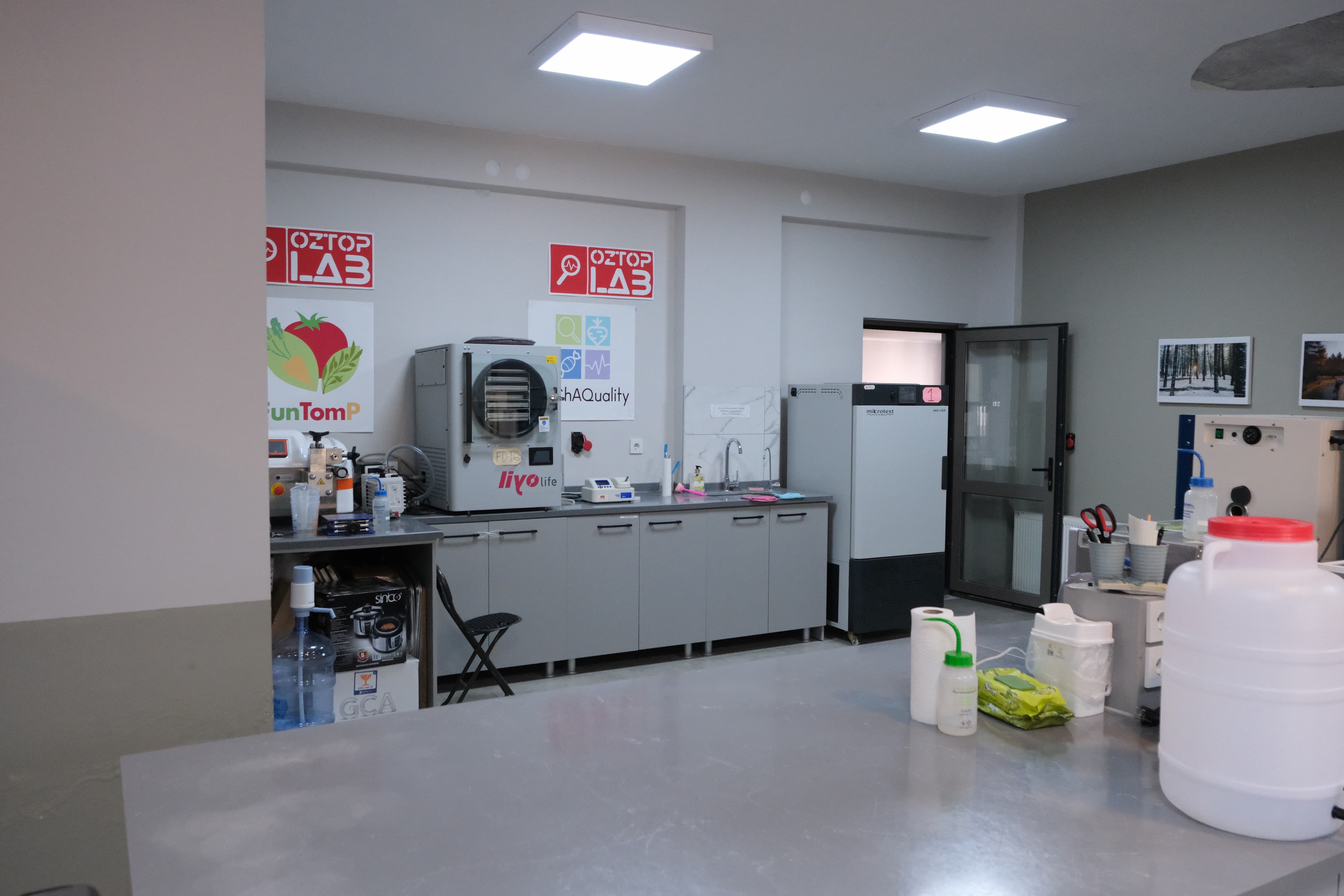
The Food Technologies Laboratory at Middle East Technical University operates dedicated facilities for food processing, material characterization, and analytical research.
Our infrastructure includes a Food Processing Pilot Laboratory, multiple Nuclear Magnetic Resonance (NMR) systems, and laboratory equipment for chemical, physical, and structural analysis.
The facilities support research on alternative proteins, food structure, functional ingredients, emulsions, aerogels, and the utilization of food processing by-products. Researchers have access to equipment for preparing food samples, developing formulations, studying processing conditions, and evaluating the properties of finished products.
Food Processing and Product Development
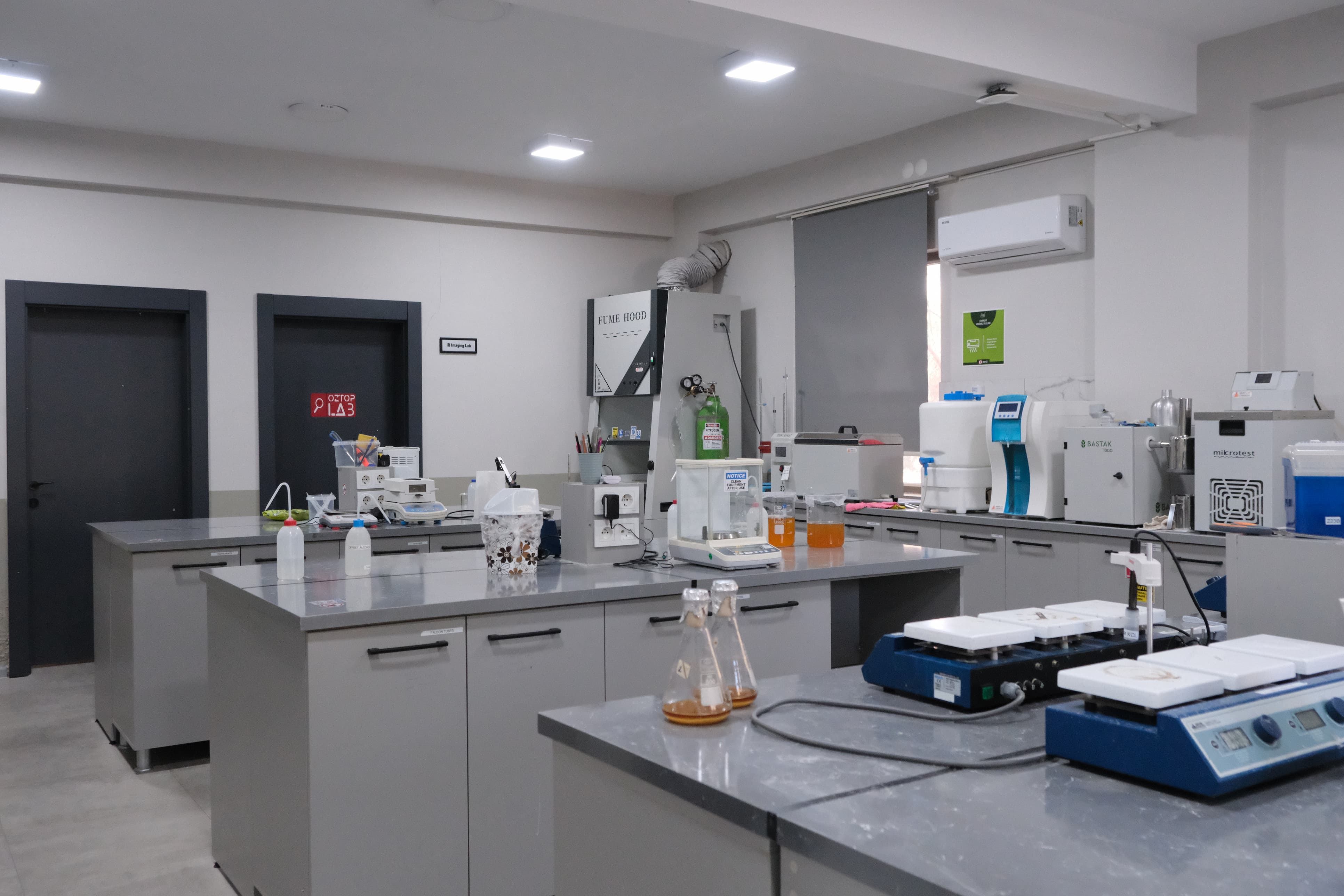
The laboratory's food processing facilities support the preparation, modification, and experimental production of food materials.
Our equipment includes high-pressure homogenizers, freeze dryers, a mini spray dryer, a supercritical fluid extraction system, and several conventional and microwave-based drying systems.
Additional equipment includes a hammer mill, an ultrasonic processing system, a centrifugal spinning device, and fermentation equipment.
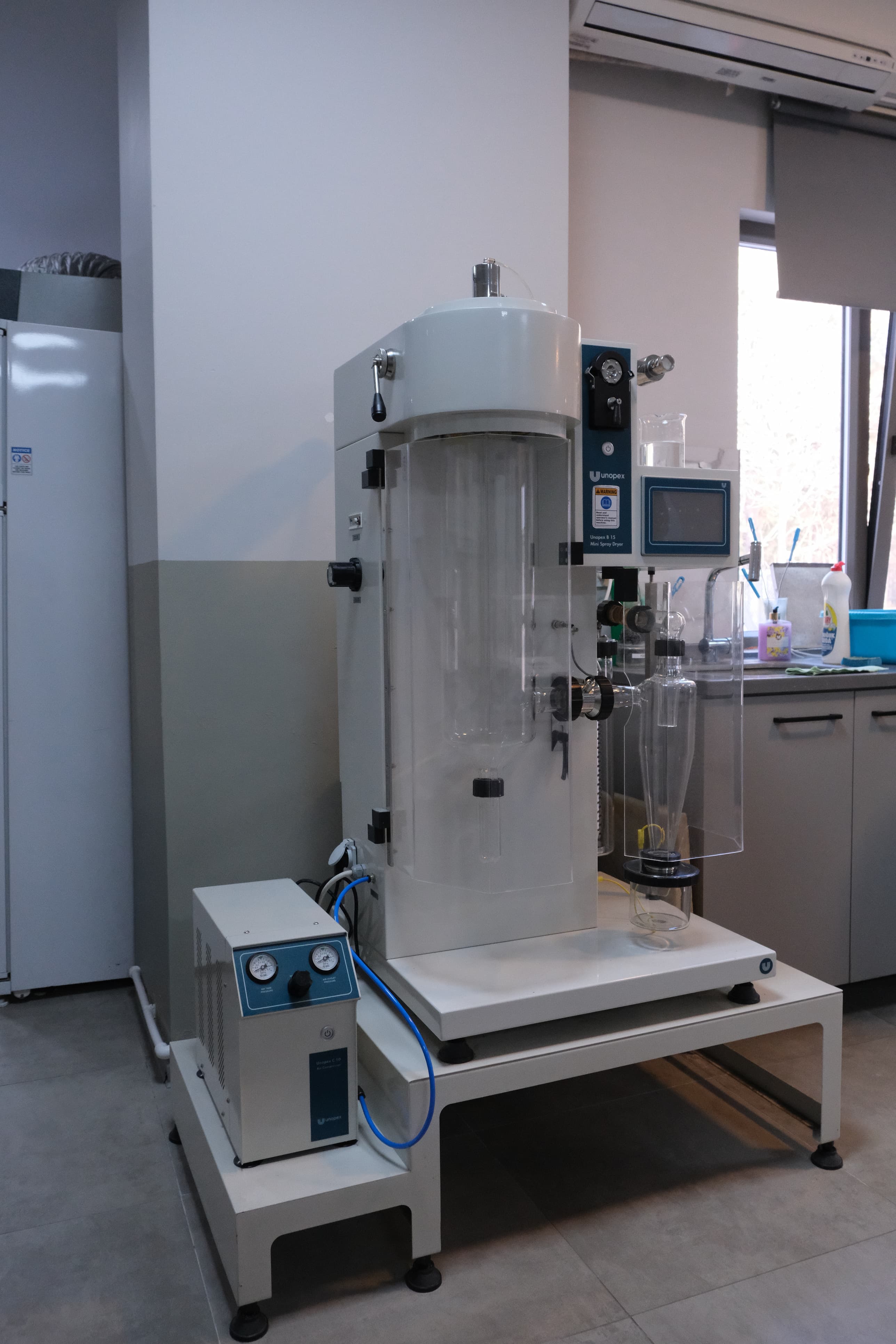
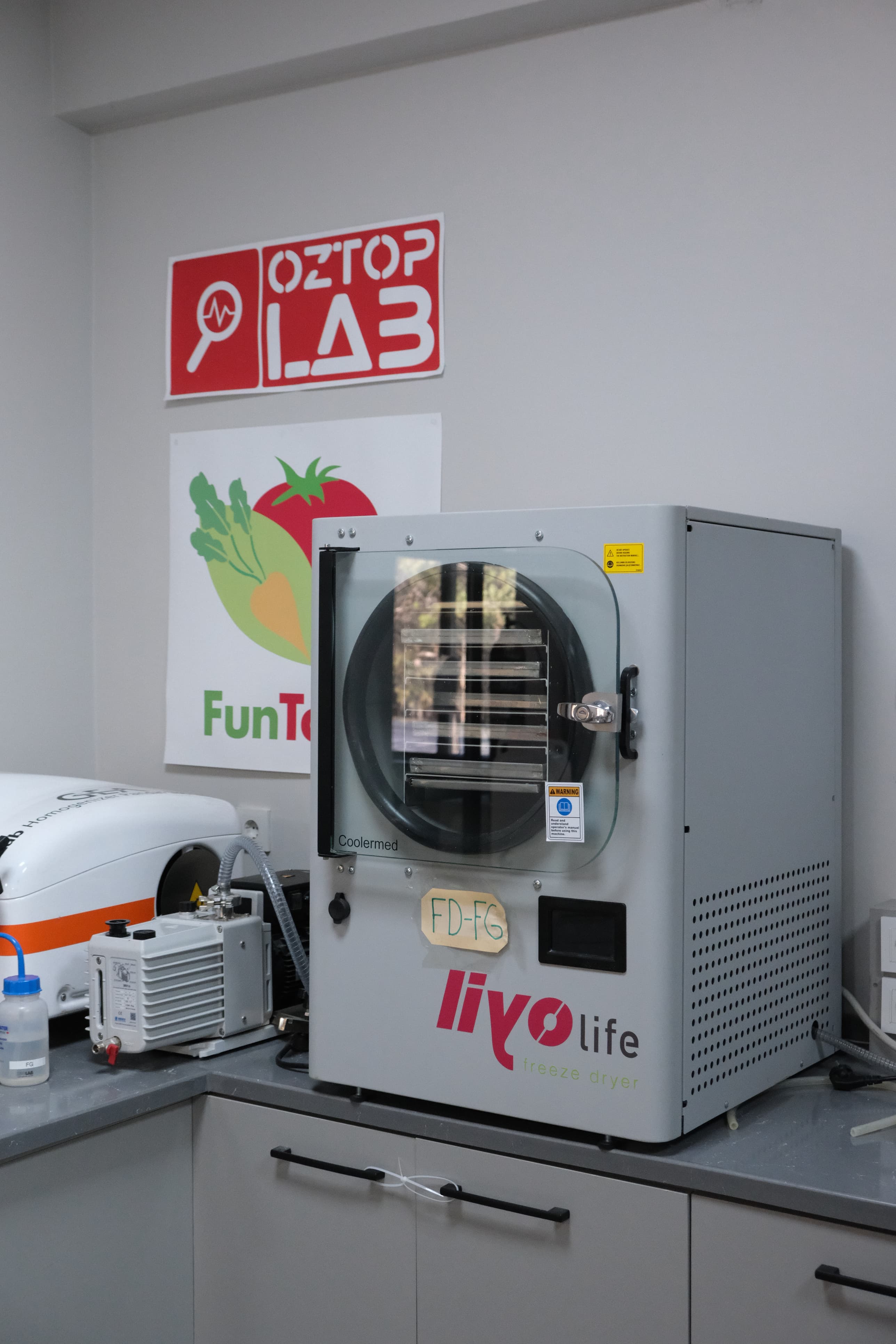
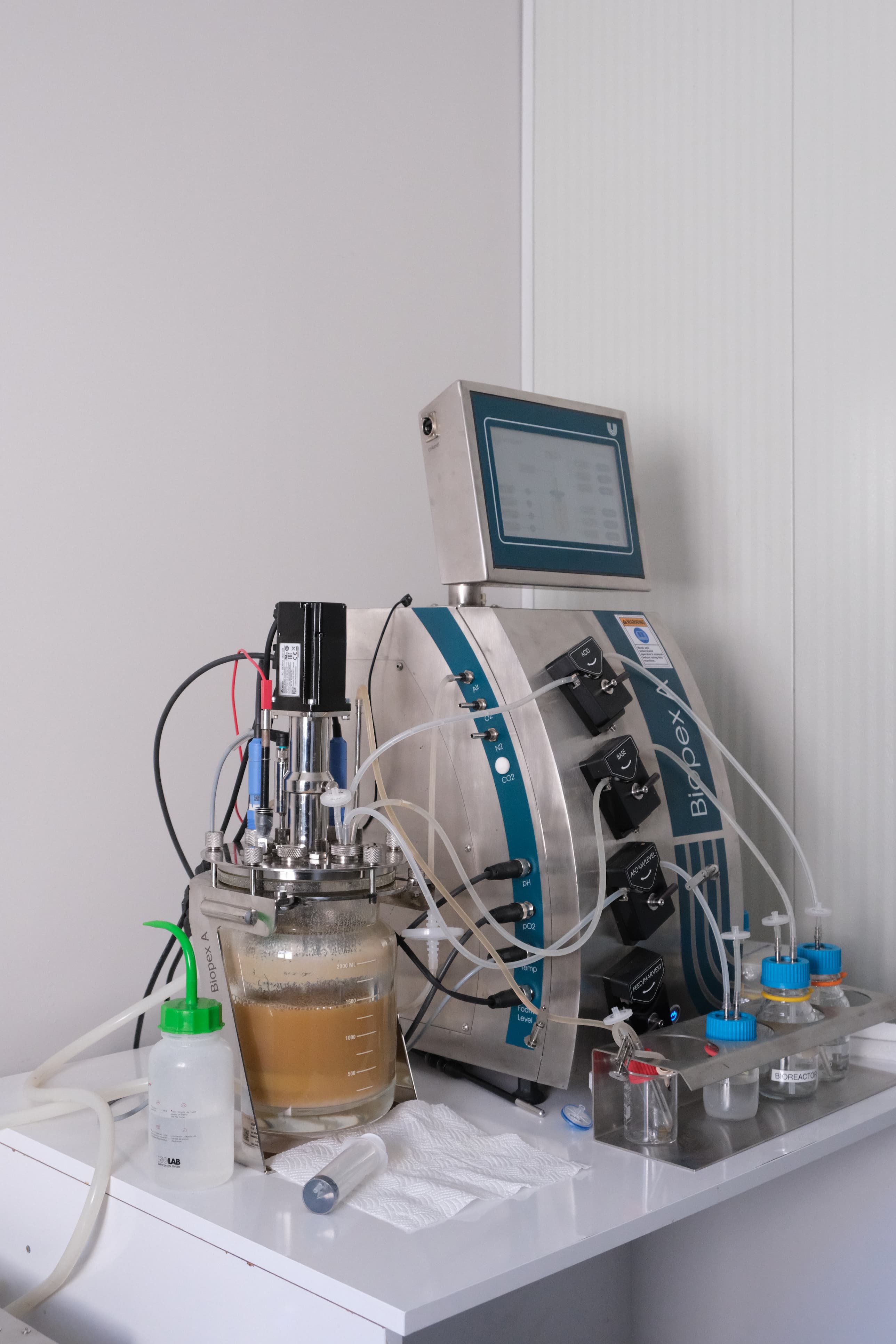
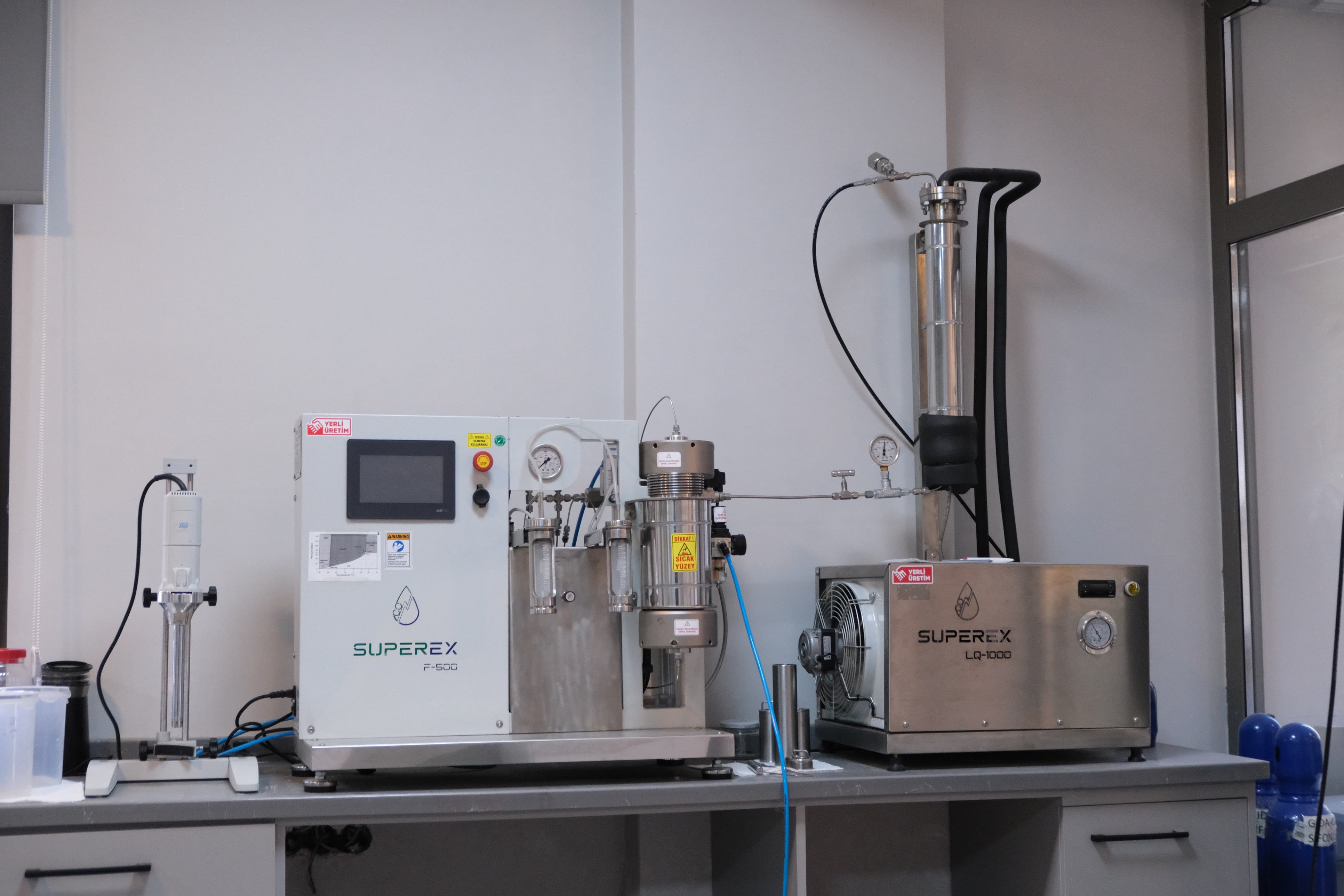
These systems support research involving
- Extraction and recovery of valuable compounds from food materials and agricultural by-products
- Protein modification and ingredient development
- Emulsion preparation and homogenization
- Freeze drying, spray drying, and microwave-assisted drying
- Production and characterization of porous food materials
- Experimental food formulations and processing optimization
The combination of processing and analytical equipment supports research from initial ingredient preparation to experimental product development.
Nuclear Magnetic Resonance and Magnetic Resonance Imaging
Magnetic resonance techniques are a major part of the laboratory's research infrastructure.
The laboratory's equipment inventory includes five magnetic resonance systems, including three Spin Track Grunin instruments, a SpinCore system, and a Pure Devices MagSpec system with benchtop MRI capabilities.
These instruments operate at different magnetic field strengths and support non-destructive investigations of food materials.
Our magnetic resonance research covers
- Water distribution and molecular mobility in food systems
- NMR relaxation measurements
- Structural changes during food processing and storage
- Characterization of emulsions, gels, and protein-based materials
- Food quality and authenticity investigations
- Monitoring physical changes in complex food systems
The availability of multiple NMR instruments supports experimental studies using different measurement conditions and magnetic resonance approaches.
Physical and Structural Characterization
Understanding food structure and material behaviour is an important part of our research.
The laboratory's characterization equipment includes a viscometer, a particle size analyzer, and microscopy equipment.
Researchers use these instruments to investigate the physical behaviour of food materials during formulation, processing, and storage.
Research capabilities include
- Rheological characterization and viscosity measurements
- Flow behaviour of food materials
- Particle size distribution analysis
- Structural characterization of emulsions and gels
- Investigation of protein and polysaccharide interactions
- Physical characterization of novel food ingredients
These analyses support the development of products with targeted structural, functional, and processing properties.
Chemical and Spectroscopic Analysis
The laboratory is equipped for chemical analysis and the measurement of selected physicochemical properties of food materials.
Its analytical instruments include a Near-Infrared Spectrometer, UV-Visible Spectrophotometers, and a Karl Fischer titrator.
Additional instruments include a moisture analyzer, water activity meter, pH meters, and hyperspectral imaging equipment.
These instruments support measurements involving
- Moisture content and water activity
- Water content determination using Karl Fischer titration
- pH measurement
- UV-Visible absorbance/turbidity analysis
- Near-infrared spectral characterization
- Selected physical and chemical quality parameters
The laboratory combines these methods with its magnetic resonance and rheological equipment to investigate relationships between food composition, structure, and functionality.
Sample Preparation and Controlled Conditions
The laboratory maintains equipment for sample preparation, experimental processing, and controlled storage conditions.
Its inventory includes three climatic test cabinets, conventional and vacuum ovens, refrigerated centrifugation equipment, an IKA Ultra-Turrax homogenizer, ultrasonic cleaning systems, and a rotary evaporator.
Two fume hoods support experimental work requiring local exhaust ventilation.
The laboratory's controlled-environment equipment supports studies involving temperature-dependent changes, storage conditions, and the physical stability of food materials.
What Sets Our Facilities Apart
One of the laboratory's main strengths is the combination of food processing equipment and analytical instruments within the same research environment.
Researchers work across different stages of food research, from the extraction and preparation of ingredients to the characterization of their molecular, structural, and functional properties.
The laboratory's five magnetic resonance systems provide substantial capacity for non-destructive food characterization. Together with rheological, spectroscopic, and particle size analysis, these instruments support the investigation of food systems through several complementary techniques.
The dedicated processing facilities allow researchers to study how formulation and processing conditions influence material properties. Experimental findings from analytical measurements inform further formulation and processing studies.
This combination supports research beyond routine food testing, including the development of alternative protein ingredients, functional food products, food-grade aerogels, and materials derived from food processing waste.
The facilities serve MSc and PhD research, national and international projects, and collaborative studies with academic and industrial partners.